

Plant-Based Milk vs Cow’s Milk: A Comprehensive Nutrition Comparison
Choosing milk for daily use should feel simple, but confusing labels can make it a challenge. We’re here to fix that with clear numbers and practical guidance. This article compares the nutritional value of plant-based milks and cow’s milk, using typical nutrition information per 1 cup (240 ml) and favoring unsweetened plant-based versions for a fair comparison. We will explain what matters most for protein, carbs, fats, and key micronutrients to help you make an informed choice. Impact-Site-Verification: 1743349195
We align milk choices with your health goals, covering muscle support, weight loss, steady blood sugar, and gut comfort. We also provide quick label-reading tips for cleaner picks and share taste notes for coffee and cooking, since flavor and texture are key drivers of real-world use. By the end of this guide, you’ll be able to match a milk to your body, values, and budget. We use plain language, direct advice, and realistic ranges, with a core focus on the keyword: plant-based.
Plant-Based Milk vs. Cow’s Milk: The Quick Snapshot
The two main categories of milk—plant-based and dairy—differ significantly in their protein content, carbohydrate source, fat type, and micronutrient profiles. We use a standard 1-cup serving as our baseline for comparison. Keep in mind that brand formulas can vary, so it’s always important to read the labels.
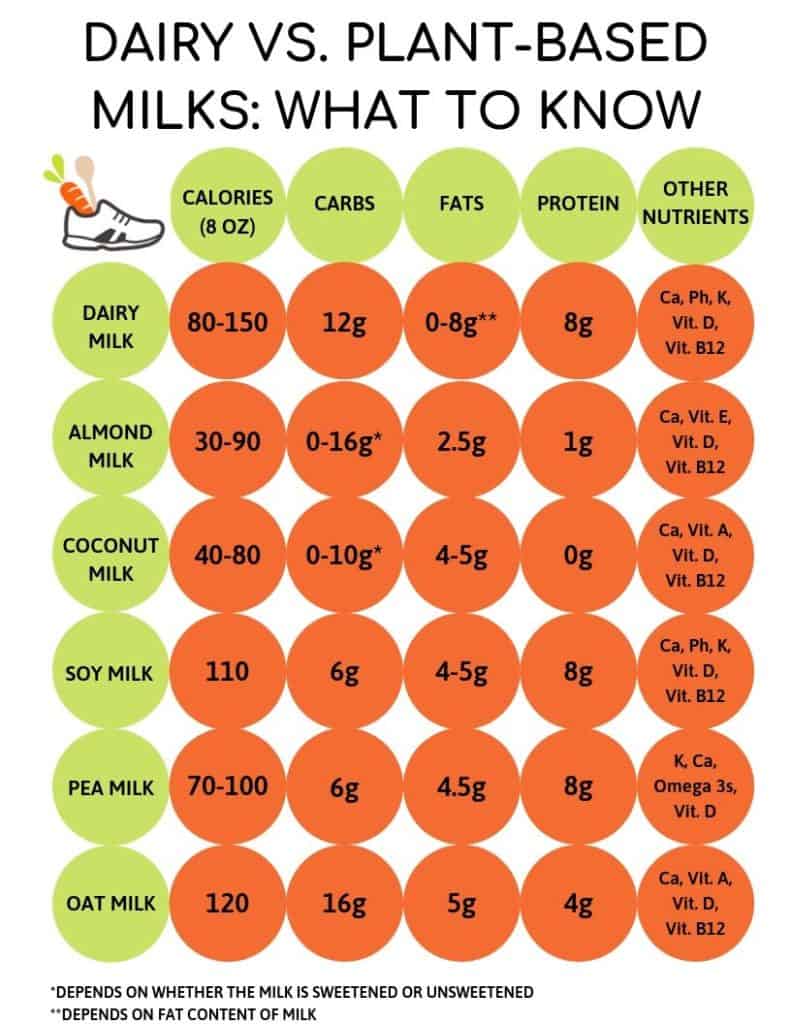
A visual comparison of the nutritional profiles of popular milk options.
•Protein: Cow’s milk is high in complete protein. Among plant-based options, soy and pea milk are strong contenders, while most nut milks are low in protein, a fact confirmed by nutrition experts at the University of Utah Health.
•Carbs and Sugar: Cow’s milk contains natural lactose. Oat and rice milks tend to be higher in carbohydrates, and sweetened plant-based versions can contain significant added sugar.
•Fat: Dairy milk includes saturated fat. Plant-based milks usually favor unsaturated fats, though coconut beverages can be high in saturated fats, as noted by the Mayo Clinic.
•Micronutrients: Dairy milk naturally contains calcium, iodine, and B12. Many plant-based milks are fortified with calcium, vitamin D, and B12 to match dairy’s profile, a point highlighted by the U.S. Food and Drug Administration.
•Allergies and Tolerance: Plant-based milks are lactose-free, making them a great option for those with lactose intolerance. Dairy can be difficult for some people to digest, an issue that affects a significant portion of the population according to research published by the National Center for Biotechnology Information.
•Taste and Use: Oat milk is creamy and ideal for coffee. Soy milk cooks well. Almond milk is light and refreshing. Cow’s milk is a versatile option that performs well in most recipes.
What Counts as Plant-Based Milk?
Plant-based milks are derived from grains, legumes, nuts, and seeds. The production methods differ depending on the source. Some, like almond and cashew milk, are made by soaking and blending. Others, like oat milk, involve grinding and cooking. Some, such as pea and soy milk, are made by extracting proteins. Common types of plant-based milk include soy, oat, almond, coconut beverage, pea, hemp, rice, and cashew.
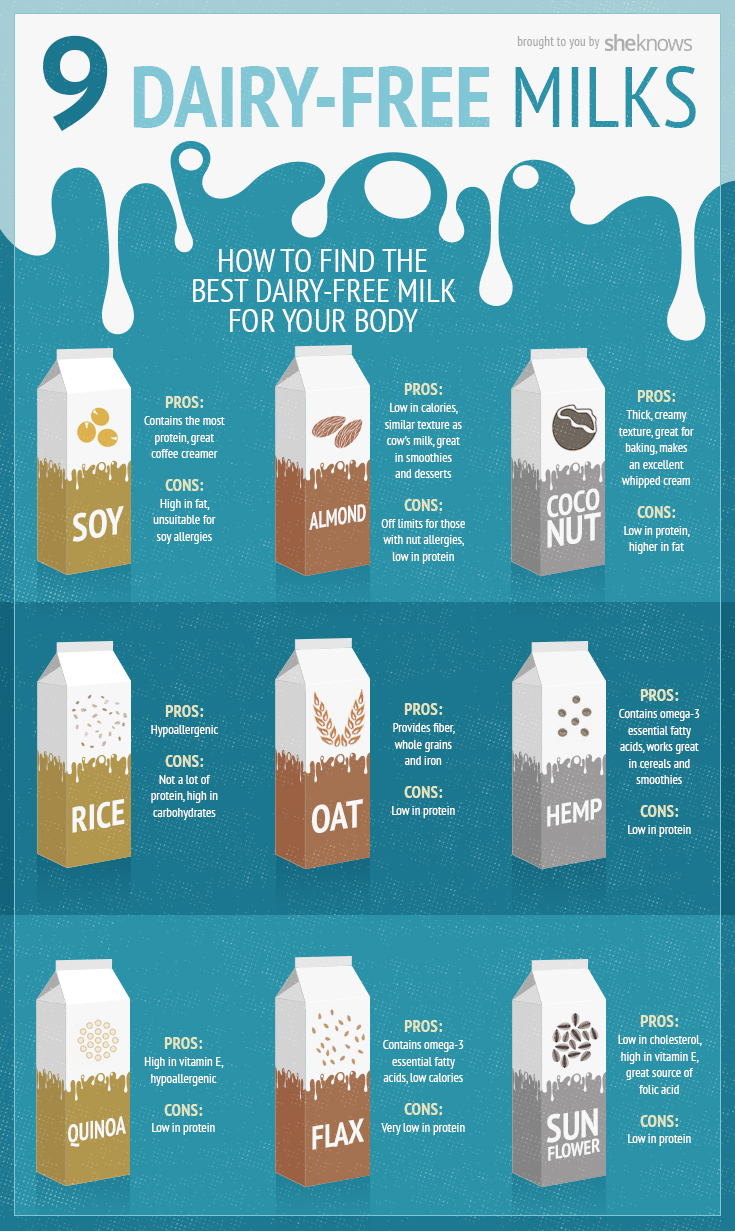
A guide to the variety of plant-based milks available.
These milks share a few common traits: they contain zero cholesterol and are lactose-free. They are often fortified with calcium, vitamin D, and B12. Many also contain added oils or gums to improve their body and stability. Unsweetened versions have lower sugar content and provide a fairer basis for comparison with cow’s milk.
How Cow’s Milk Compares at a Glance
A standard cup of 2% cow’s milk contains approximately 122 calories, 8 grams of protein, 5 grams of fat, and 12 grams of natural sugar from lactose. Skim milk has about 83 calories, 8 grams of protein, and almost no fat. Whole milk contains around 150 calories, 8 grams of protein, and 8 grams of fat.
The protein in cow’s milk is complete and highly bioavailable. It is a natural source of calcium, iodine, potassium, and some vitamin A. As reported by U.S. Dairy, most milk sold in the US is fortified with vitamin D. Lactose-free cow’s milk contains lactase, an enzyme that breaks down lactose into simple sugars, resulting in a sweeter taste while maintaining a similar total sugar content.
Nutrition Facts Compared, Side-by-Side
We compare typical unsweetened versions per cup. Actual values can vary by brand and fortification, so it’s always important to read the Nutrition Facts panel.
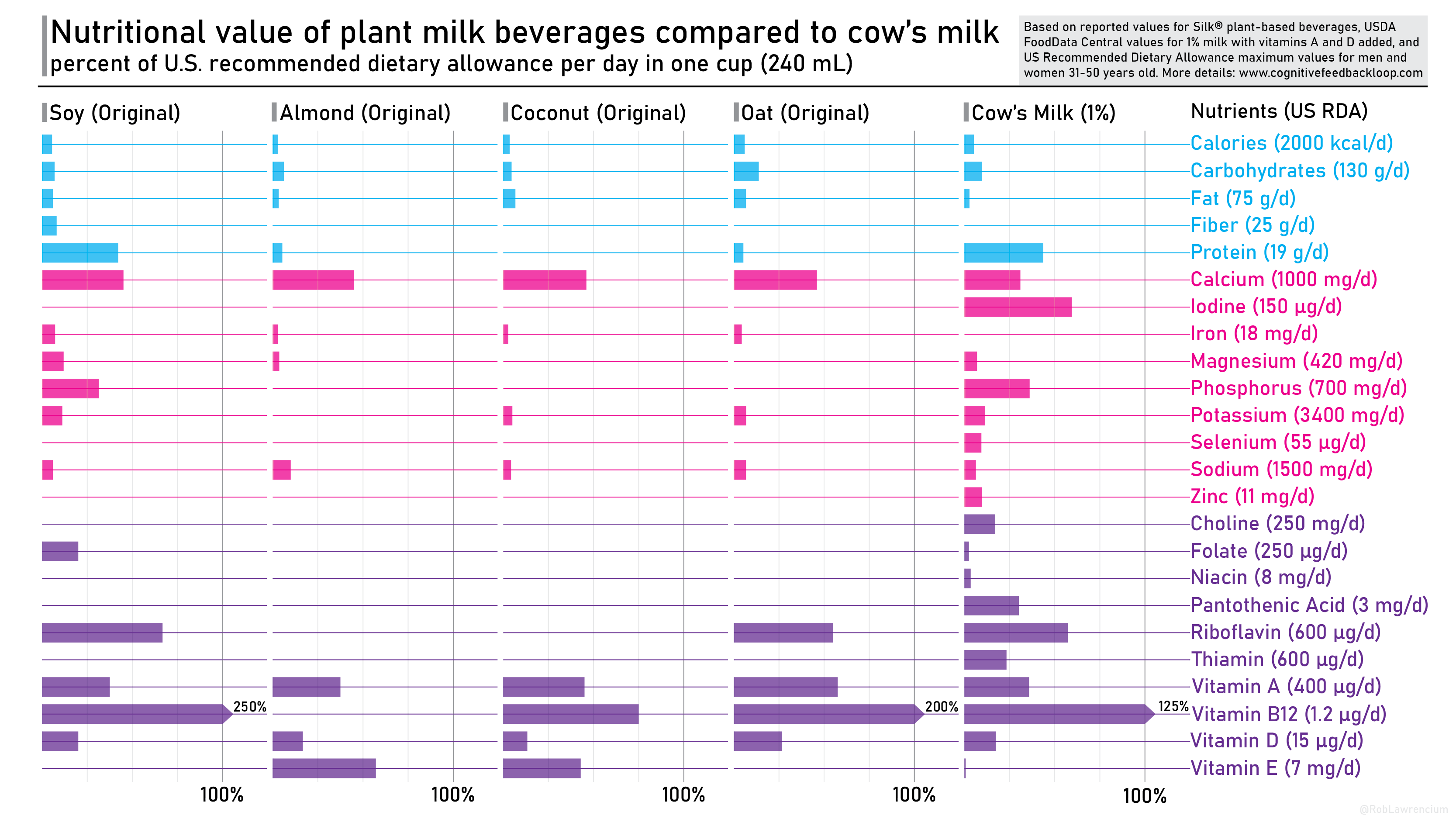
A detailed table comparing the nutritional content of different milk types.
Calories and Macros Per Cup
•Cow’s milk (2%): ~122 kcal, 8 g protein, 5 g fat, 12 g carbs.
•Skim milk: ~83 kcal, 8 g protein, 0 g fat, 12 g carbs.
•Whole milk: ~150 kcal, 8 g protein, 8 g fat, 12 g carbs.
•Soy milk: ~80-100 kcal, 7-8 g protein, 3-4 g fat, 3-5 g carbs.
•Pea milk: ~80-100 kcal, 7-8 g protein, 4-5 g fat, 0-2 g carbs.
•Oat milk: ~120-160 kcal, 2-4 g protein, 4-7 g fat, 15-25 g carbs.
•Almond milk: ~30-50 kcal, 1 g protein, 2-3 g fat, 1-2 g carbs.
•Coconut beverage: ~40-70 kcal, 0-1 g protein, 4-5 g fat, 1-3 g carbs.
•Rice milk: ~120-130 kcal, 0-1 g protein, 2-3 g fat, 23-26 g carbs.
Takeaway: For low calories, choose almond milk. For high protein, opt for cow’s, soy, or pea milk. For a creamy texture, oat milk is a good choice, but be mindful of the higher carb content.
Protein Quality and Amino Acids
Protein quality is crucial for muscle growth and recovery. Cow’s milk contains complete protein with high digestibility. Soy and pea milks also deliver high-quality protein, with about 7-8 grams per cup, and they test well in quality scores according to a review in Frontiers in Nutrition. Almond, coconut, rice, and most other nut milks are low in protein. If you enjoy the taste of a low-protein milk, you can supplement your intake with other protein-rich foods like eggs, tofu, beans, or a protein powder.
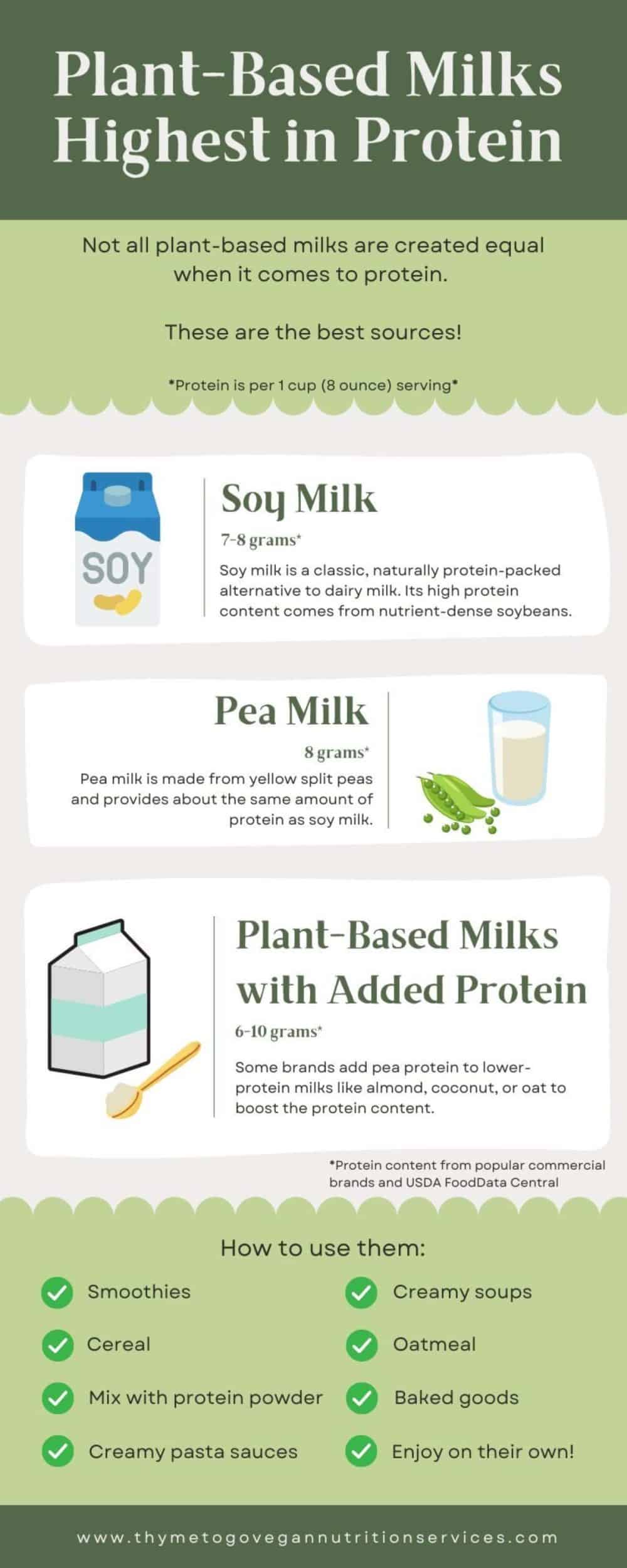
A comparison of protein content in various milk types.
Sugar and Carbs: Lactose vs. Added Sugar
The sugar in cow’s milk comes from lactose, with about 12 grams per cup. Lactose-free milk tastes sweeter because the lactose is broken down into simple sugars, but the total sugar content remains similar. For plant-based options, it’s important to look for the word “unsweetened.” Many flavored or barista versions contain added sugar. Oat and rice milks are higher in carbs and can cause a more rapid increase in blood sugar levels. If you’re tracking your carb intake or trying to reduce sugar, choose unsweetened varieties.
Fat Types and Heart Health
The quality of fat in your milk matters. Whole dairy milk contains more saturated fat, while 2% milk is a more moderate option. Skim milk has almost no fat. Many plant-based milks use canola or sunflower oil, which are mostly unsaturated. Coconut beverage is higher in saturated fat and can raise LDL cholesterol for some people. Hemp and soy milks provide some omega-3 ALA. If you’re managing your cholesterol, the Mayo Clinic suggests aiming for unsweetened soy, pea, or almond milk and limiting your intake of coconut beverage and full-fat dairy.
Vitamins and Minerals: Calcium, Vitamin D, B12, Iodine
•Calcium: Cow’s milk offers about 300 mg of calcium per cup. Fortified plant-based milks often provide 300-450 mg. The bioavailability of calcium is good for both, but as a study in ScienceDirect points out, it’s important to shake cartons of plant-based milk, as the minerals can settle at the bottom.
•Vitamin D: Many milks are fortified with 2.5-5 mcg (100-200 IU) of vitamin D per cup, and as Consumer Reports notes, sometimes more.
•Vitamin B12: Dairy milk contains some B12, and fortified plant-based versions often add about 0.5-3 mcg.
•Iodine: Cow’s milk usually provides about 60-120 mcg of iodine per cup. A study on the NCBI database shows that most plant-based milks are low in iodine unless they are fortified.
•Potassium: Dairy milk averages about 300-400 mg of potassium per cup. The potassium content of plant-based products varies widely.
If you don’t consume dairy, choose fortified plant-based milks and include other sources of iodine in your diet, such as iodized salt or sea vegetables in moderation.
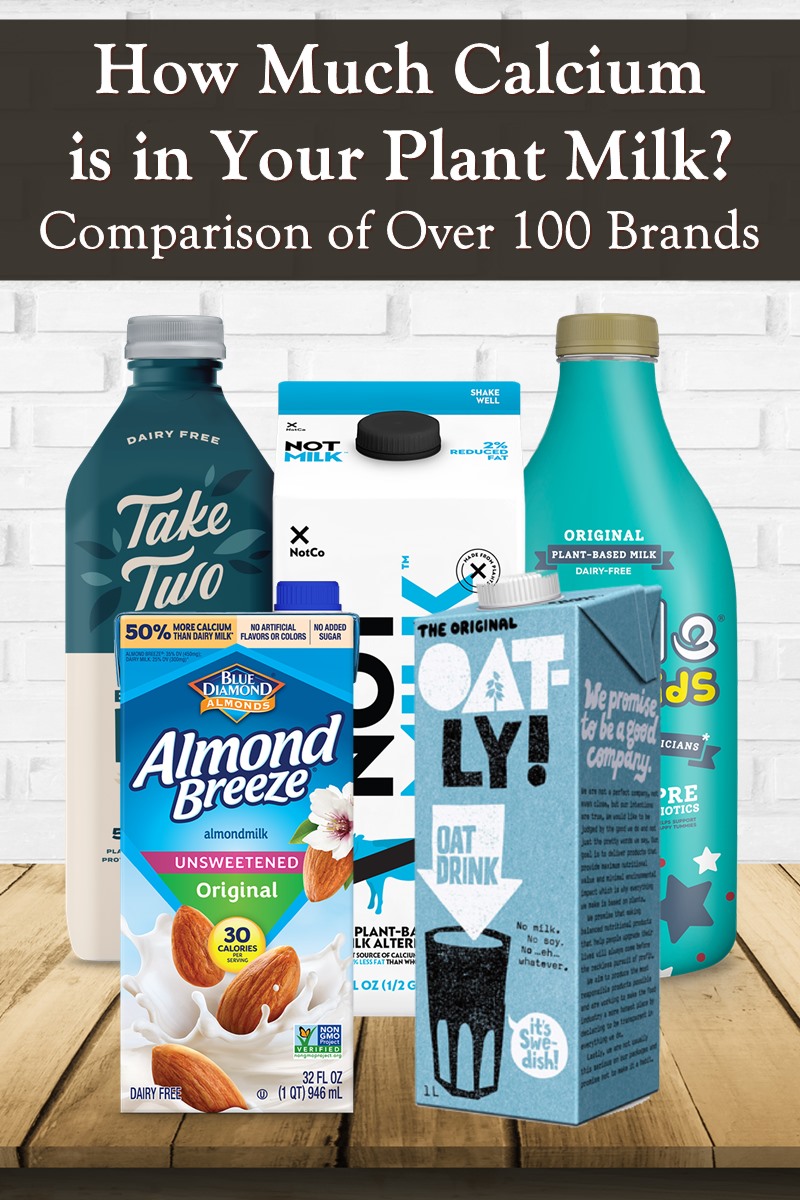
A look at the calcium and vitamin D content in different milks.
Choose the Right Milk for Your Goals
We’ve matched different types of milk to various health and lifestyle goals to provide short, clear guidance.
Build Muscle and Meet Protein Goals
•Choose cow’s milk, soy milk, or pea milk for 7-8 grams of protein per cup.
•Dairy and soy provide high-quality protein that’s ideal for recovery.
•If needed, add a scoop of protein to your smoothies.
•Pair your milk with other protein-rich foods like eggs, tofu, beans, or Greek-style plant-based yogurt.
Recommendation: Use soy or pea milk in post-workout shakes if you’re avoiding dairy.
Weight Loss and Fullness
•Prioritize unsweetened options.
•Soy or pea milk can help with fullness due to its protein content.
•Almond milk is very low in calories and works well in coffee and cereal.
•Avoid added sugars and be mindful of serving sizes in lattes.
Recommendation: Keep a low-calorie option for beverages and a higher-protein option for meals.
Steady Blood Sugar and Diabetes
•Use unsweetened soy, almond, or pea milk for lower carbohydrate content.
•Oat and rice milks may cause a more significant spike in blood sugar.
•Always check the total carbs and added sugars on the label.
•Swap sweetened versions for unsweetened in smoothies and overnight oats.
Recommendation: Anchor your breakfast with protein and choose low-carb milks.
Allergies, Lactose Intolerance, and Gut Comfort
•Lactose Intolerance: Plant-based options are naturally lactose-free. You can also choose lactose-free cow’s milk, which is easier for many to digest, as explained in a 2023 NCBI review.
•Milk Protein Allergy: Avoid dairy and select plant-based alternatives. Food Allergy Research & Education provides clear guidance on distinguishing between a milk allergy and lactose intolerance.
•Soy Allergy: Try pea, almond, oat, or hemp milk.
•Sensitive Gut: Choose products with short ingredient lists. Some people may be sensitive to gums and carrageenan.
Recommendation: Test one new milk at a time and pay attention to how you feel.
Taste, Cooking, and Shopping Tips
Flavor and texture are key to consistency. We align the milk with the task and read labels with care. For a broader dietary context, you can explore the benefits of a plant-based diet, as detailed by The Holistic Life Hub.
Best Options for Coffee and Frothing
Oat milk provides a strong body and fine microfoam, and barista formulas can improve stability. Soy milk also froths well and has a neutral taste with espresso. Cow’s milk remains the classic choice for foam and latte art. For less sugar, use unsweetened barista versions or standard unsweetened cartons and adjust your steaming technique. Some barista milks contain added oil or sugar for texture, so be sure to check the labels.
Baking, Sauces, and Soups
Use soy or pea milk for savory sauces, as their protein content adds body. Oat milk works well for creamy soups and chowders. Almond milk is suitable for light cakes and pancakes. Coconut beverage adds a mild richness to curries and stews. Choose unsweetened versions for savory dishes and match the flavor to the recipe. Start with a 1:1 swap and adjust the thickness with a cornstarch slurry if needed.
How to Read Labels Like a Pro
•Choose unsweetened whenever possible, aiming for 0 grams of added sugar.
•If you want to feel full, look for a protein content of 7-8 grams per cup.
•Check for calcium (300-450 mg per cup), vitamin D (2.5-5 mcg), and B12.
•If you’re dairy-free, scan for iodine or plan to get it from other sources.
•Pay attention to oils, sodium, and serving size.
Sustainability Note
Oat and soy milk often have a lower environmental footprint than dairy. Almond milk requires more water to produce, and rice can have higher emissions. Research from Our World in Data provides a detailed comparison of the environmental impacts. Choose the option that aligns with your values and needs.
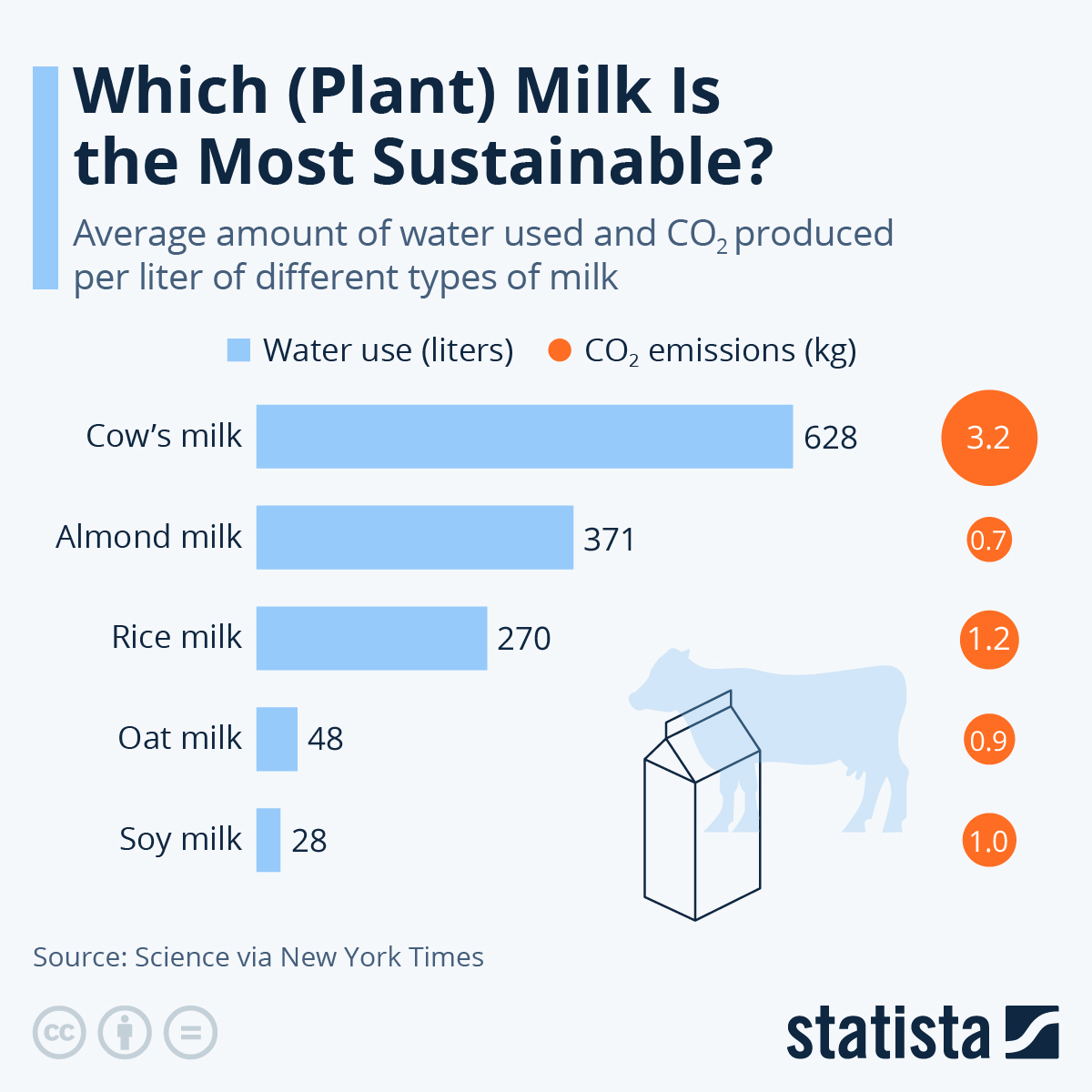
A comparison of the environmental impact of different milk types.
Clean Ingredients and Additive Check
Short ingredient lists can help with tolerance. Common additives include gellan gum, guar gum, lecithin, and carrageenan. If you prefer fewer additives, choose brands that don’t contain carrageenan. Shake cartons before pouring to ensure that minerals don’t settle and the texture remains even.
FAQ: Smart Answers for Quick Decisions
Is cow’s milk better for kids?
For most children over the age of 1, the Centers for Disease Control and Prevention (CDC) advises that cow’s milk or fortified soy milk can support their protein, calcium, vitamin D, and iodine needs. It’s always best to discuss amounts and allergies with a pediatrician. For families following a fully plant-based diet, choose fortified soy milk, ensure adequate iodine intake, and build meals around beans, tofu, whole grains, fruits, and vegetables.
Which plant-based milk has the most protein?
Soy milk and pea milk typically lead with about 7-8 grams of protein per cup. They are the top plant-based choices for muscle growth, recovery, and fullness. Almond, coconut, and rice milks are low in protein. Labels can vary, so always check the nutrition panel.
Can we get enough calcium without dairy?
Yes. Fortified plant-based milks often provide 300-450 mg of calcium per cup, which is similar to dairy. As research on ScienceDirect confirms, shaking the carton is key to getting the full benefit. You can also add calcium-set tofu, leafy greens, and fortified juices to your diet as needed.
Is lactose-free cow’s milk healthier than plant-based milk?
Not necessarily. Lactose-free cow’s milk retains the protein and calcium of dairy and can be easier for some people to digest. Plant-based options can be lower in saturated fat and are suitable for those with dairy allergies or who follow a vegan diet. The best choice depends on your goals, protein needs, sugar intake, and how your body feels.
Conclusion
We’ve compared the protein, carbs, fats, and key micronutrients across both dairy and plant-based milks. Fortified plant-based milks can match dairy
In terms of calcium, vitamin D, and B12, but protein content varies significantly
by type. Simple picks work best: cow’s, soy, or pea milk for protein; almond milk for low calories; oat milk for creaminess; coconut beverage for a richer flavour; and lactose-free dairy for easier digestion. Read labels, choose unsweetened options, and align your choices with your health goals, taste, and budget. Try two different options this week and see what feels best in your cup and in your body.
Share Your Choice!
What’s your go-to milk? Did this guide help you decide? We’d love to see what you’re pouring in your coffee or cereal!
•Follow us on Instagram @theholisticlifehub and tag us in your photos with your favourite milk alternative. Use the hashtag #MilkComparison to join the conversation.
•Pin. • Pin our infographics on Pinterest! Save our helpful charts to your favourite health and nutrition boards to help others make an informed choice.
•Join the discussion on Facebook! Like our page and comment on our post to share your experiences and tips with the community.